

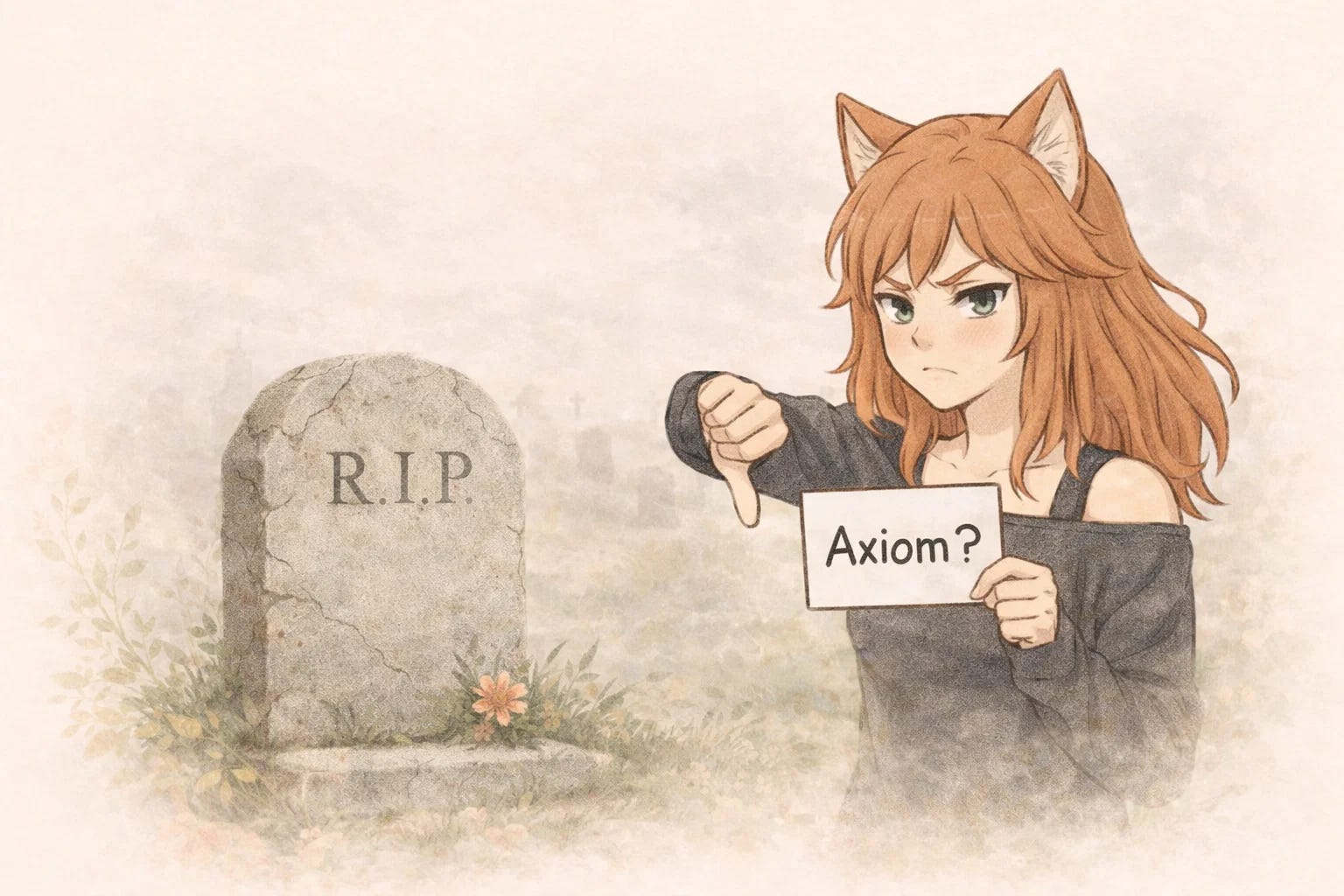
After writing about my ethics yesterday, there was some discussion about the axioms that I think are most needed to derive the rest of my ethics.
pleasure is good
nobody argues against this.
suffering is bad
Someone did argue that this is potentially untrue, that there exists “voluntary suffering”. I think this is one case where language is a bit inadequate.
I think it is very possible for “suffering” to be good. There are two cases for this:
“suffering” in which states are described as negative, but which are still positive valence. One example of this is the burn one feels from spicy food. This still feels good and is pleasurable, despite nominally having aspects which are described as bad. Some similar things are when crying feels cathartic. Or people who gain direct pleasure from painful stimuli. Often there is a limit to how far one can go before the direct pain stops feeling directly pleasurable, but there is a lot of variation in the human mind, and some people gain mental pleasure from being able to withstand levels of pain that are considered unbearable. This can be due to to things like feelings of pride, or servitude, or novelty.
“suffering” in which one was actually in pain/suffering at the time of the even, but which leads one to better mental states after the fact. Perhaps it leads one to grow and fix one’s other problems. Perhaps it is a memorable experience one finds valuable.
I have experienced both. Suffering can be a way to describe this, if the experience is also either positive-valence, or leading to longer-term pleasure, then I’m not sure it counts.
I think there are some forms of suffering that are near universally felt as bad. This can be chronic pain one gets from illness, or the suffering one can feel when feverish, scenarios of starvation or hunger, or through effective torture. And I guess with “suffering is bad” I am trying to point more-so at this.
death is bad
I guess I’m unsure. There are some more thought experiments that drive this intuition.
If one had the universe suddenly end and everyone died, would that be bad? Oleander argued not in a previous comment, but I think so. Partially this would be because you would be depriving people of more pleasure (as was argued by Measure).
What if everyone was in a state of very mild net-suffering overall? Hmm I guess I’m not as sure. I think this is just a bad state of the world. I would say death is bad but by some bounded amount that is out-weighed by the continued suffering.
What if everyone was replaced by beings that are similarly happy plus a tiny bit more? I guess I feel pretty uncomfortable about this one. In theory this should be an obvious trade, if the increase in happiness is sufficiently high, even with my framework. And that is probably true. But my values conflict here and I don’t like it.
I guess to some extent this is where my slightly more person-affecting views come it.
One slight intuition is something like “a universe which has the same pleasurable state repeated over and over again is less valuable than one which has more variation“. But I don’t think this is sufficient to explain it.
One could also consider the Epicurean challenge: “”So death, the most terrifying of ills, is nothing to us, since so long as we exist, death is not with us; but when death comes, then we do not exist“. But i don’t really buy it. I care about states of the world outside of when I am alive.
To be honest, it probably comes down to something like “I value my own continued existence, and thus end up drawing ethics in a way where this is justified”. So I am probably just being biased here. I am unsure how much I should update here though.
I am shocked that those were the axioms that birthed the discussion, because my initial read was instinctively go "pleasure IS DEFINETELY != good", while other 2 felt okay-ish.
Lots of people (me included) want the world to BE good, not feel good about the world. It's trivially easy to imagine a case where those diverge.
Just a couple:
taking a pill that changes your neurochemistry in a way that grants you eternal bliss for killing your family and loved ones;
entire plot of Matrix;
lying to yourself about your impact on the world or people around you, to make yourself feel better.
In general trying to codify human values in a clean set of axioms might be a bad idea. They are extremely messy, constantly evolving, often times conflicting, and I think that's beautiful and we should embrace it. And it's dangerous to try and "polish" your "soul" to get rid of any of the conflicts, and should be done with extreme caution.